
Where Wedding Flowers Make the Biggest Impact—and Where You Can Save
When planning wedding flowers in France, one of the hardest decisions is knowing where flowers will make the greatest difference. Most couples have never planned an event of this scale before. They are presented with a list that may include bouquets, ceremony flowers, aisle arrangements, welcome signs, cocktail tables, bars, seating plans, dinner tables, fireplaces, staircases and cake flowers. It can seem as though every location needs something.
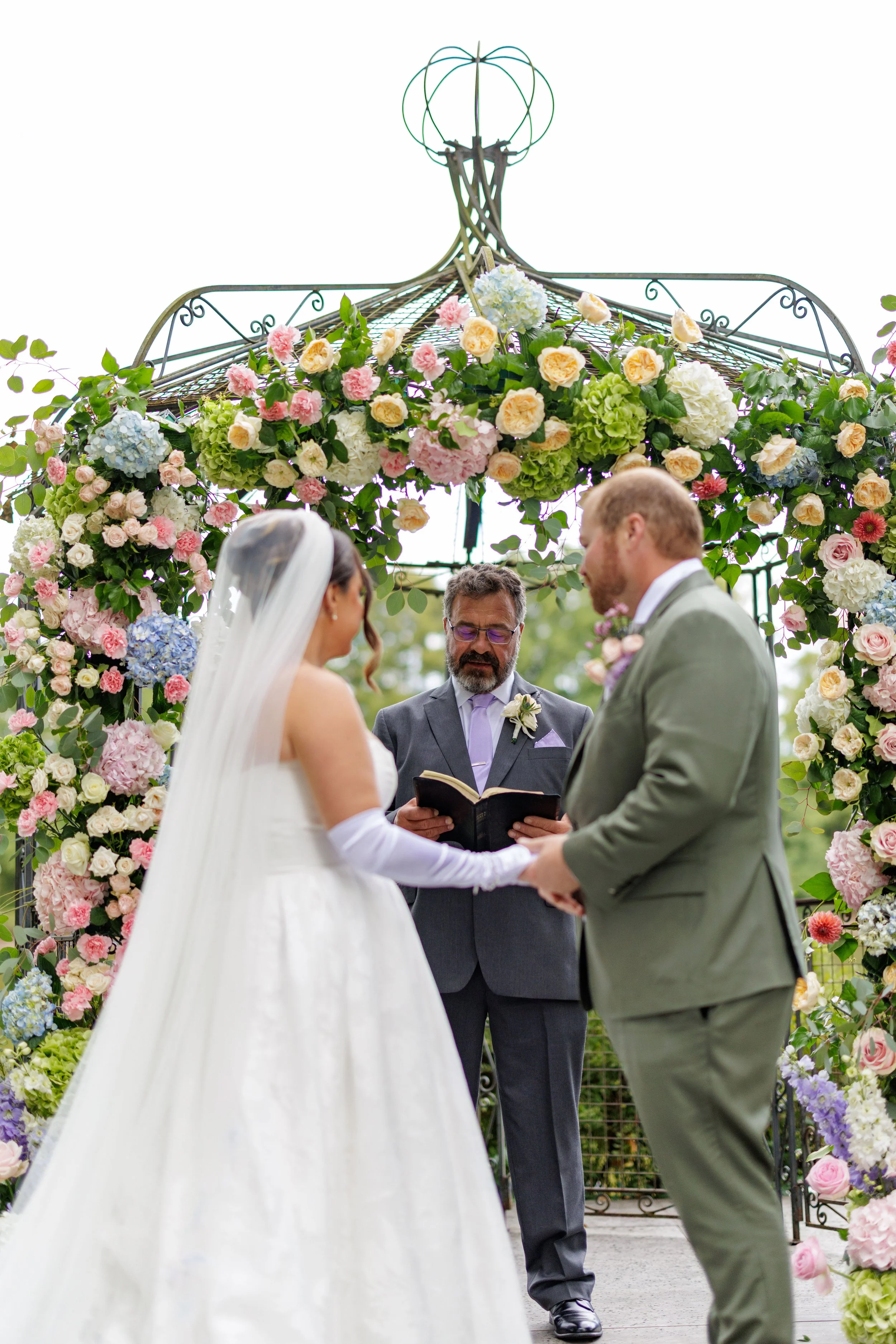
Impactful floral arrangements at the ceremony makes for beautiful wedding photos that you will see forever.
It does not.
Some floral elements transform the entire atmosphere of a wedding. Others are lovely but have very little effect on how the day looks or feels. Understanding the difference is one of the best ways to create beautiful wedding flowers without spending unnecessarily.
The Ceremony Usually Deserves Priority
The ceremony is often the most emotionally important part of the wedding, and it is one of the strongest places to use flowers. Guests arrive and see the setting before the couple enters. The ceremony flowers create the visual frame for the vows and appear in many of the most meaningful photographs. For outdoor weddings in France, this may mean floral pillars, an arch, an asymmetrical installation or a meadow of flowers growing around the ceremony area. For an indoor ceremony, flowers might soften a fireplace, frame a doorway or create focus in a large room.
The design does not need to be enormous, but it must suit the setting. A small arrangement can disappear against a château façade or beneath a large tree. It is often better to concentrate the ceremony budget into two or three substantial elements than to spread it across many small aisle decorations.
Spend on What Guests See First
First impressions matter. Guests often form their impression of the wedding before they reach their seats. This does not mean every entrance needs an elaborate floral installation. It means the first important view should feel considered. At some venues, this is the château entrance. At others, it is the ceremony itself, the courtyard used for reception drinks or the dining room revealed after cocktail hour. Identify the first moment with genuine visual impact and support it. A beautiful entrance arrangement may be worthwhile when it greets every guest and establishes the colour palette. A small arrangement hidden beside a sign at the car park may not be. Think in terms of views rather than individual objects.
The Dining Area Has Lasting Impact
Guests may spend thirty minutes at the ceremony, but they often spend several hours at dinner. This makes the reception tables one of the most important parts of the floral plan. The flowers affect the entire atmosphere of the evening. They create color and texture at eye level, connect the place settings and candles, and help a large room feel more intimate. For long tables, the design should create movement down the full length without becoming repetitive. This may involve clusters of flowers, low garden-style arrangements, delicate foliage and candlelight.
For round tables, the arrangements need enough scale to hold their own in the room while allowing conversation. The goal is not to cover every centimeter. It is to create a consistent floral rhythm that can be felt throughout the space. If the reception budget is limited, I would prioritise the guest tables and the couple’s table before adding flowers to secondary areas.
Consider One Statement Installation
A statement floral design can become the image guests associate with the wedding. This might be a flower-filled staircase, a suspended installation, an abundant fireplace, a floral cloud or a garden growing around the entrance to dinner. These designs require a meaningful investment. They involve substantial flowers, mechanics, preparation, transport and installation time. They are not always the correct choice for a limited budget. However, one well-chosen statement piece may provide more visual value than decorating several smaller areas. The best installation should belong to the venue. It should highlight an architectural feature or create an experience that could not be reproduced in an ordinary room. Do not add a large floral installation merely because it is fashionable. Choose it because the location calls for it.
The Bridal Bouquet Is Small but Important
The bridal bouquet is not the largest floral element, but it is one of the most personal. It remains with the bride through much of the day and appears in portraits, ceremony photographs and detail images. This is not usually the place where I recommend cutting heavily. A bouquet should be proportioned to the bride, the dress and the style of the wedding. It should feel comfortable to hold and beautiful from more than one angle. That does not mean it needs to be huge or filled exclusively with premium varieties. The value comes from the design, colour and way it completes the overall floral story. The bouquet is also one of the few wedding flowers the couple may choose to preserve afterward.
The Bar Can Be Worth Decorating
A bar is often a natural gathering place. Guests return to it repeatedly, which makes it a stronger location for flowers than many small cocktail tables. One well-scaled bar arrangement can add color to the reception-drinks space and become part of the background in candid photographs. It also provides a visual anchor in an area that may otherwise contain practical equipment, bottles and service items. When choosing between several tiny cocktail arrangements and one strong bar design, the bar will often create greater impact. This is particularly true when the bar faces the guests or occupies a central position.
Seating-Plan Flowers Depend on the Setting
A seating plan has become a popular location for wedding flowers. Sometimes this works beautifully. The flowers welcome guests into dinner and can help an otherwise functional display feel part of the wedding design. However, it is not always necessary. If the seating plan is placed against an attractive stone wall, beside a garden or in a naturally beautiful courtyard, extensive flowers may add little. A few ceremony arrangements can sometimes be repurposed around it after the vows. Before ordering a separate seating-plan installation, consider how long guests will stand there and whether the display is already visually strong. A seating plan needs to be readable first. Flowers should support it, not engulf it.
Staircases Need More Than a Few Flowers
Château staircases are tempting. They appear in venue photographs and seem to offer the perfect opportunity for sweeping floral designs. They can also become expensive very quickly. A staircase usually requires length, repetition and enough flowers to remain visible from below. A few small arrangements tied to the railing may not create the effect couples expect. If a floral staircase is a priority, it should be treated as a statement installation and given the necessary budget. If it is not a priority, leave the staircase alone. Beautiful architecture does not always need decoration, and an under-scaled design can be less effective than no flowers at all.
Where You Can Usually Save: Cocktail Tables
Small cocktail arrangements are pleasant, but they rarely define the wedding. Guests move between tables, put down glasses and gather in groups. The tables may be covered with used napkins and drinks within minutes. For a generous budget, delicate flowers on cocktail tables can complete the setting. For a tighter budget, they are often one of the first elements I would remove. Concentrate instead on the bar, entrance or main gathering point. A few selected arrangements will usually be enough.
Where You Can Usually Save: Signs and Small Displays
Wedding signs have multiplied. Welcome signs, order-of-the-day signs, guest-book signs, memorial signs, bar menus, favor signs and seating displays may each be given their own flowers. The cost is not only in the flower quantity. Every small design must be prepared, packed, transported, unpacked and placed. Choose the signs that matter and allow some of them to remain unadorned. Beautiful stationery does not always need flowers beside it. A single welcome arrangement can often support the entire entrance area without adding a floral accent to every nearby object.
Where You Can Usually Save: Cake Flowers
Cake flowers can be beautiful, but they should be evaluated in relation to the cake itself. A simple cake may benefit from a small floral accent. A highly decorated French pâtisserie or croquembouche may not need flowers at all. Large quantities of fresh flowers on a cake also require careful coordination between the florist and pastry team. Do not add flowers simply because cake photographs often include them. Consider whether the dessert already has enough detail and whether the cake will be displayed prominently for a meaningful amount of time.
Where You Can Usually Save: Aisle Flowers
Aisle flowers can create a beautiful sense of arrival, particularly when they form a continuous meadow leading toward the ceremony. They can also consume a large part of the budget. A few tiny arrangements placed far apart may not create enough visual effect to justify the cost. When the ceremony focal point is strong, the aisle can often remain simple. Chairs, the landscape and the movement of the bridal party already create structure. Another option is to concentrate flowers near the entrance and altar rather than decorating the full length. Aisle flowers are worth the investment when they create a complete visual experience, not when they are included merely to fill a line on a checklist.
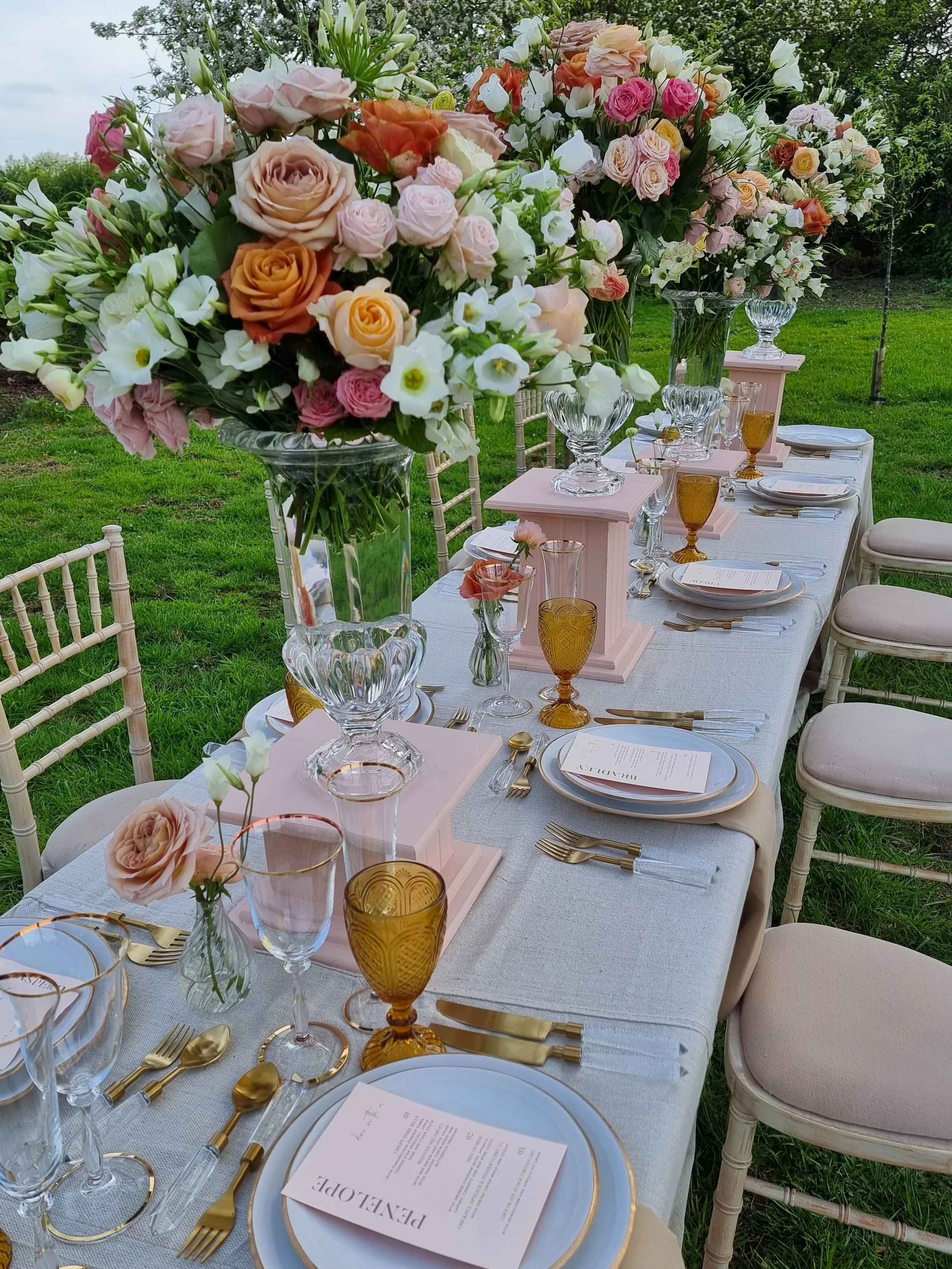
Your guests spend a lot of time at the table. Make it count.
Repurposing Helps, but It Is Not Free
Couples are often advised to repurpose every arrangement. This is sensible in principle, but there are practical limits. Flowers may need to be moved during a narrow window while guests are elsewhere. Staff must lift, transport and reinstall them. Some pieces may be wet, heavy or attached to structures. Others may have been designed for one direction and look unfinished from another. Repurposing can save money on additional flowers, but it may still involve labour. The most successful approach is to select a few ceremony designs that are naturally suited to a second location. This gives the flowers another life without forcing every arrangement into a role it was not designed to perform.
Create a Hierarchy for Your Floral Budget
The strongest wedding floral plans have a clear order of importance. For many weddings in France, that hierarchy might be:
Bridal bouquet and essential personal flowers.
Ceremony focal flowers.
Reception-table flowers and candlelight.
One entrance, bar or statement design.
Secondary decorative flowers if the budget allows.
Your order may be different.
Perhaps dinner is the centre of the celebration and the ceremony setting already has a magnificent view. Perhaps the staircase is the feature you have imagined from the beginning. Perhaps your wedding is small, and one long flower-filled table matters more than anything else. There is no universal list of required wedding flowers. There is only the question of where flowers will have meaning for your wedding.
The Best Floral Investment Changes the Feeling
The value of wedding flowers is not measured by how many arrangements appear on the invoice. It is measured by what they do to the space. Do they frame the ceremony? Do they make the dining room feel warm and generous? Do they draw attention to the beauty of the venue? Do they create a moment guests will remember? Spend where the flowers change the feeling. Save where they only fill a surface. That is how you create wedding flowers in France that feel abundant, personal and worth the investment.
Continue Planning Your Wedding Flowers in France
If you're planning your floral budget, these articles may help:
•How to Make a €5,000 Wedding Flower Budget Look Like €10,000
• 10 Ways to Save Money on Wedding Flowers Without Anyone Noticing
Looking for bespoke wedding flowers for your celebration in France?
→View My Wedding Floral Services
Ready to talk about your wedding?
